Stubborn Sanctity
“Canonization” is the formal process in the Roman Catholic tradition for “recognizing” holiness. Aptly named “Signs of Holiness,” this column offers a glimpse into an understanding and appreciation of its essential “proofs.”
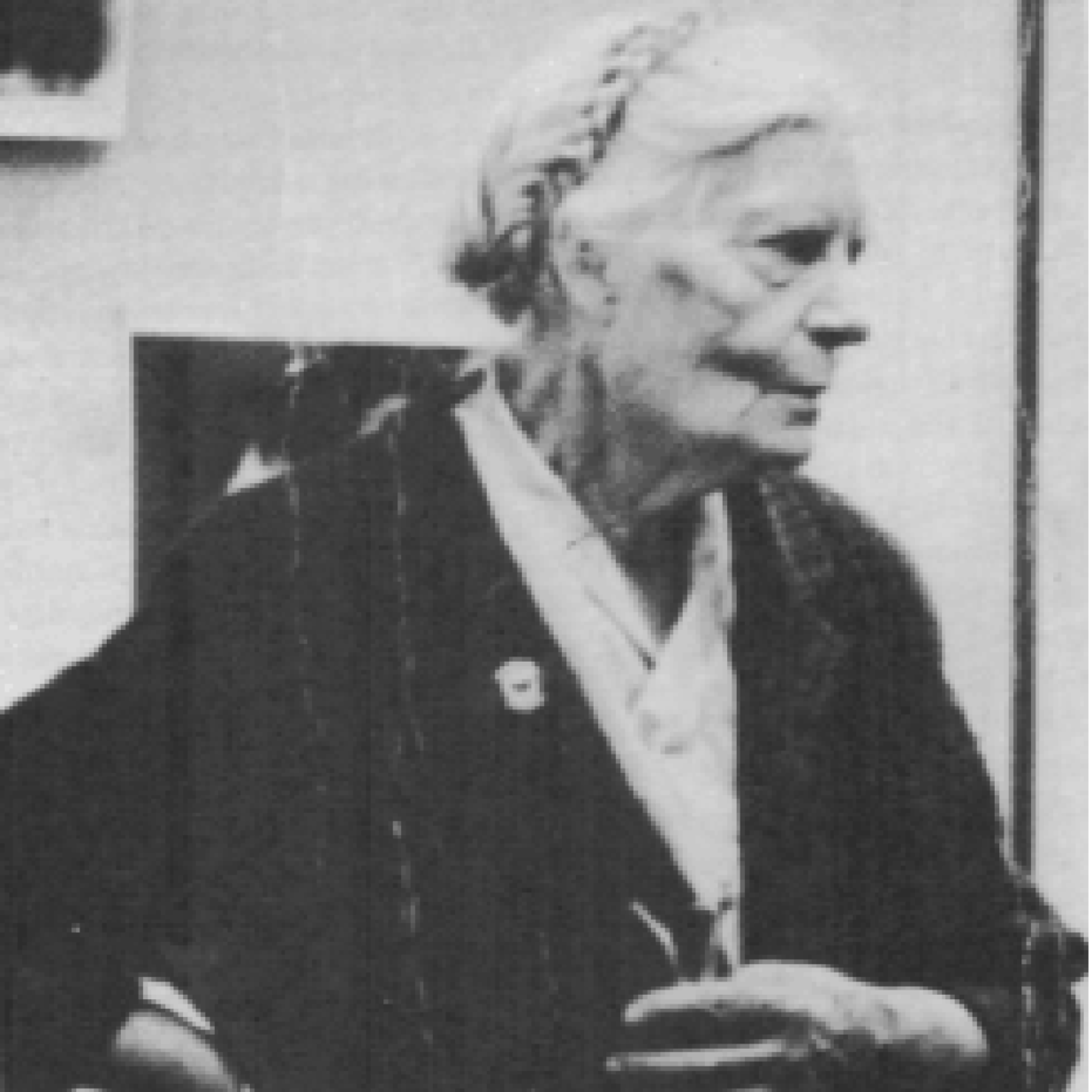
Even in her old age, people would comment on how youthful Dorothy seemed. Perhaps it was because she was still animated by the ideals of her youth. She never really lost them. No wonder her favorite virtue was steadfastness.
Our readers will recall the ink spent in past issues exploring the virtues whose “heroic” practice is essential to the success of any candidate for sainthood: the great theological virtues of faith, hope, and charity and the cardinal virtues of prudence, justice, fortitude and temperance.
In the “positio” — a spiritual biography that draws on the literally tons of documentation of Day’s holiness sent to Rome in December 2021 — these virtues will be looked at long and hard. However, the Guild learned in a pilgrimage this past fall to the Vatican office overseeing canonization (the Dicastery for the Causes of Saints), that other virtues unique to Dorothy, like perhaps her steadfastness, will be examined as well.
How else to characterize her decades at the Catholic Worker, practicing voluntary poverty, non-violence, and the works of mercy, other than steadfast? Granddaughter Kate Hennessy likened Dorothy’s sense of vocation — her hunger for God wed to her passion for justice — to an “arrow sent on its way with no turning back.” Dorothy saw her life as a journey, or as she used to say, a pilgrimage.
For us gratefully in her wake, it’s worth asking how she sustained her singular path in the hope that in our own lives, in our own way, we too stay firm.

For one thing, she took a long view of history and often spoke of Christianity as being in its infancy. She challenged the idea that it was too late to live like the early Christians, famously stating, “It is no use to say that we are born 2,000 years too late to give room to Christ.” Christ, she believed, often disguised as a poor person, is still present and asking for “room in our hearts.” Truly, she asserted, we’ve only just begun! And beginnings, she noted in the story of her conversion, The Long Loneliness, are always exciting.
That kind of energy was attractive to the young people, idealists like herself, if not always believers, who have always flocked to the Worker. They fed her as she fed them.
She also gave little time to fretting over “effectiveness” — freeing her from worry over immediate results and allowing her to appreciate the steady endurance of the work itself. She often advised, “Don’t worry about being effective. Just concentrate on being faithful to the truth.”
And freeing her too — inasmuch as anyone ever can be — from the all too familiar investment of ego in outcomes. Not that she didn’t want to have an impact! Or, that she felt powerless. But she entrusted her “success” to Divine Providence. She loved the story of St. Teresa of Avila, the great reformer of the Carmelite Order. When Teresa was preparing to establish a new convent in Toledo, Spain, and having only a very small sum of money, she was questioned on how she could possibly succeed with such meager means. Reportedly, she replied: “Teresa and three ducats are nothing; but God, Teresa, and three ducats are everything.”
A humility manifested in a daily diligence also helped Dorothy’s staying the course. She taught that we cannot change the world all at once, but must “lay one brick at a time, take one step at a time,’ remaining responsible only for the action of the present.
And doubtless an ironic humor and a wickedly astute awareness of human contradictions played a role in keeping her (and others!) on track, as when she observed, “Everyone wants a revolution, but nobody wants to do the dishes!”

In the end though, it was her prayer that sustained her persistence. She relied not only on daily Mass and Communion but also on the Psalms. She loved Psalm 119, “I will run the way of thy commandments, when thou shalt enlarge my heart.” She attributed her stubbornness to reading them, a ritual she pursued over her morning coffee.
This saintly stubbornness of hers was arguably needed most when World War II tested her pacifism. Houses closed, young Catholic Worker men went off to fight. Still, she insisted on retaining the movement’s pacifist stand. The Gospel, she believed, could not be suspended in time of war. There could be no turning back from its mandate to be peacemakers.
To the end of her life, she remained a steadfast pacifist, upholding non-violence as the only true path to peace, even when it meant arrests and public criticism.
Three years after her death in 1980, the U.S. Catholic Bishops “embraced Gospel nonviolence” as a valid moral framework. Today, increasingly, the whole Church (witness the exhortations of Pope Leo) seems to be closing the distance between its traditional “just war” teaching and the still moving flight of her non-violent arrow.
I marvel at her steadfastness. How humbling it is. And how encouraging.

Share this post